Studio availability Two discovery slots open for engagements starting in the first quarter. Check the fit
Juniper Cove Studio
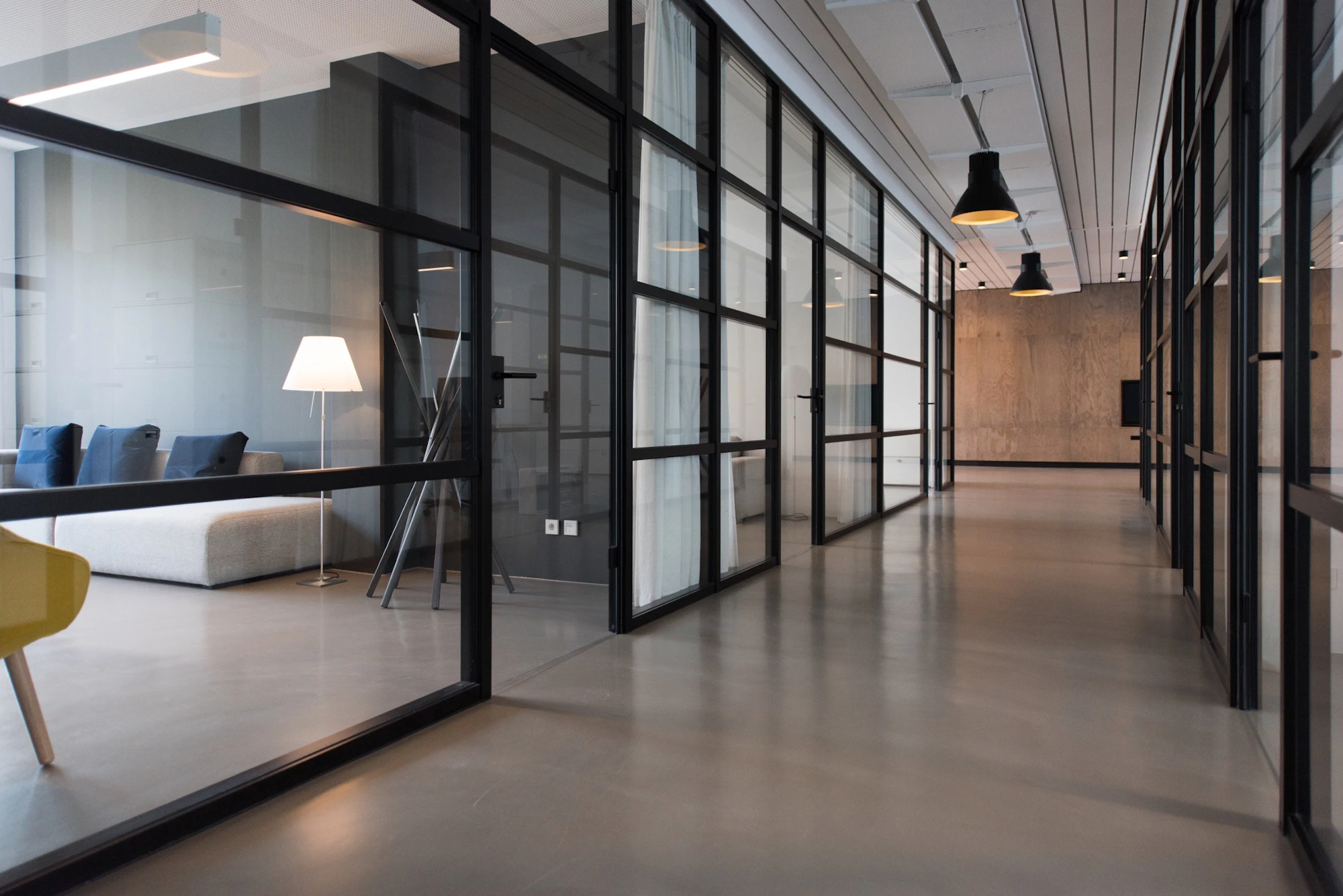
Wide daylit studio floor with long shared worktables, pinned printouts and open laptops

Brand & product studio

We build the parts of a brand that have to hold up in public.

Juniper Cove works with founders and in-house teams on identity systems, product interfaces and the websites that carry them. Small team, named people, work shown weekly.

The team
Six people. The ones who scope your work are the ones who make it.
Minimum engagement
Four weeks for a focused sprint; twelve for a full identity system.
How we work
Remote-first with a shared board, one working session a week, no status decks.

What we do

Four lanes. Most engagements use two of them.

We would rather do a narrow thing properly than quote for everything. If your problem sits outside these lanes, we will say so in the first reply.

01

Brand systems

Naming direction, wordmark, type and colour rules, and the written voice that keeps the whole thing sounding like one company as more people start using it.

You end up with
  • Logo set with clear-space and minimum-size rules
  • Type scale and colour tokens in plain CSS variables
  • A short voice guide with real examples, not adjectives
02

Product interface design

Flows, screen design and a component library for teams shipping a real product — built to be handed to engineers without a translation layer in between.

You end up with
  • Annotated flows for the paths that actually earn revenue
  • Component library with states, empties and error cases
  • A working front-end reference build of the key screens
03

Websites & editorial

Marketing sites, documentation and long-form editorial. We write structure and copy alongside the design, because a site that is designed before it is written gets rebuilt.

You end up with
  • Page architecture and copy drafted with your team
  • Responsive build tested at desktop, tablet and phone widths
  • Editable templates your team can extend without us
04

Launch & handover

The unglamorous end: asset libraries, a working file that makes sense to someone who was not in the room, and a fortnight of support while your team takes it over.

You end up with
  • Source files organised by use, not by designer habit
  • A recorded walkthrough of every system decision
  • Two weeks of answered questions after final delivery

The shape of an engagement

Four stages, and what each one asks of you.

Every engagement runs the same way regardless of size. The only thing that changes is how long each stage takes.

Stage one — week one

Scoping

A working session to find the actual constraint: the deadline, the team that inherits the work, or the decision nobody has made yet. We write the scope from that call.

What we need from youTwo hours and whoever can approve the direction.
Stage two — weeks two to four

Direction

Two or three routes, shown as real pages and screens rather than mood boards. You pick one and we kill the others properly instead of blending them.

What we need from youOne decision, made by one person, within a week.
Stage three — the long middle

Building

Weekly sessions on a shared board. Work in progress is visible the whole time, so nothing arrives as a surprise at the end of a month.

What we need from youForty-five minutes a week and quick answers on blockers.
Stage four — final fortnight

Handover

Files, tokens, a recorded walkthrough and two weeks of support while your team uses the system without us in the room.

What we need from youThe people who will own it afterwards, in the walkthrough.

We take on two engagements at a time. It keeps the people you met on your work, and it is the reason our availability is listed at the top of this page rather than hidden behind a form.

Field notes

How the work actually looks from the inside.

Three notes from recent engagements, written by the people doing the work.

Workshop table covered in printed layouts, sticky notes and marker pens during a scoping session
Note 01 — Scoping

Print it before you decide it

Direction sessions happen on paper first. Screens flatter weak hierarchy; a printed sheet on a table does not, and the argument gets shorter.

Two colleagues reviewing interface work together on a laptop at a shared desk
Note 02 — Building

Design next to the build

Component work is reviewed with an engineer in the session. Anything that cannot be built the way it was drawn gets redrawn that afternoon rather than argued about later.

Designer working at a tidy desk with a large monitor showing a layout grid
Note 03 — Handover

The file is a deliverable

Half a handover is naming things. Layers, tokens and pages get organised around how your team will search for them, not around how we happened to make them.

Engagements

Three shapes. Pick the one that matches your constraint.

Scope and cost are written per engagement after scoping — this is the structure, so you can tell in advance which conversation to start.

Sprint

One defined problem with a date attached. A launch page, a pricing flow, a rebrand of one surface.

Length
Four to six weeks
Cadence
Two sessions a week
Team
One designer, one writer
Best when
The problem is already agreed and the deadline is real

System

A full identity or product system built end to end, including the rules and files your team keeps using afterwards.

Length
Twelve to sixteen weeks
Cadence
One working session a week
Team
Two designers, one writer, one engineer
Best when
Things have been made inconsistently for a while

Embedded

We join your team at a fixed number of days a month and work inside your tools, rituals and backlog.

Length
Six months, reviewed quarterly
Cadence
Fixed days each week, in your stand-ups
Team
One or two people, the same ones throughout
Best when
You are hiring but need the work moving now

Before you write

Questions we get in the first email.

What size of company do you usually work with?

Teams between two and about eighty people, most often where there is one person responsible for design and marketing at the same time. Below that we are usually too much structure; above it you generally want an in-house team and us in the embedded shape.

Do you work with teams in other time zones?

Yes. The studio is remote-first and everything lives on a shared board, so most of the work does not need us awake at the same time. We do ask for one overlapping window each week for the working session — four hours of overlap is enough.

Who owns the work when it is finished?

You do, outright, including source files and any custom lettering or illustration made for the engagement. We keep the right to show the work publicly once you have launched, and we will wait if the timing is sensitive.

How far ahead do we need to book?

Usually four to eight weeks, because we only run two engagements at a time. Current availability is written at the top of this page and updated when it changes. Scoping calls can normally happen within a week of your enquiry.

Can you write the copy as well as design it?

For websites and editorial, yes, and we prefer to. Structure and copy are drafted with your team before the layout is finished. For product interfaces we write the interface text — button labels, empty states, errors — as part of the design.

What happens if the direction is not right?

Stage two exists for exactly that. You see two or three real routes and choose one; if none of them land we redraw within that stage rather than pushing on. If the mismatch turns out to be structural, we say so and stop rather than spending your budget politely.

Do you take over an existing project mid-flight?

Sometimes. It works when there is a clear decision-maker and the existing files can be read by someone new. We will spend the first week auditing what exists and tell you honestly whether continuing is cheaper than restarting.
Start an enquiry

Tell us the constraint, not the brief.

A few lines is plenty. We read every enquiry ourselves and reply within two working days, including when the answer is no.

  • You will hear from the person who would run the work
  • The first reply is a real answer, not a calendar link
  • If we are not the right studio, we will say why

We reply within two working days. No mailing list, no follow-up sequence.